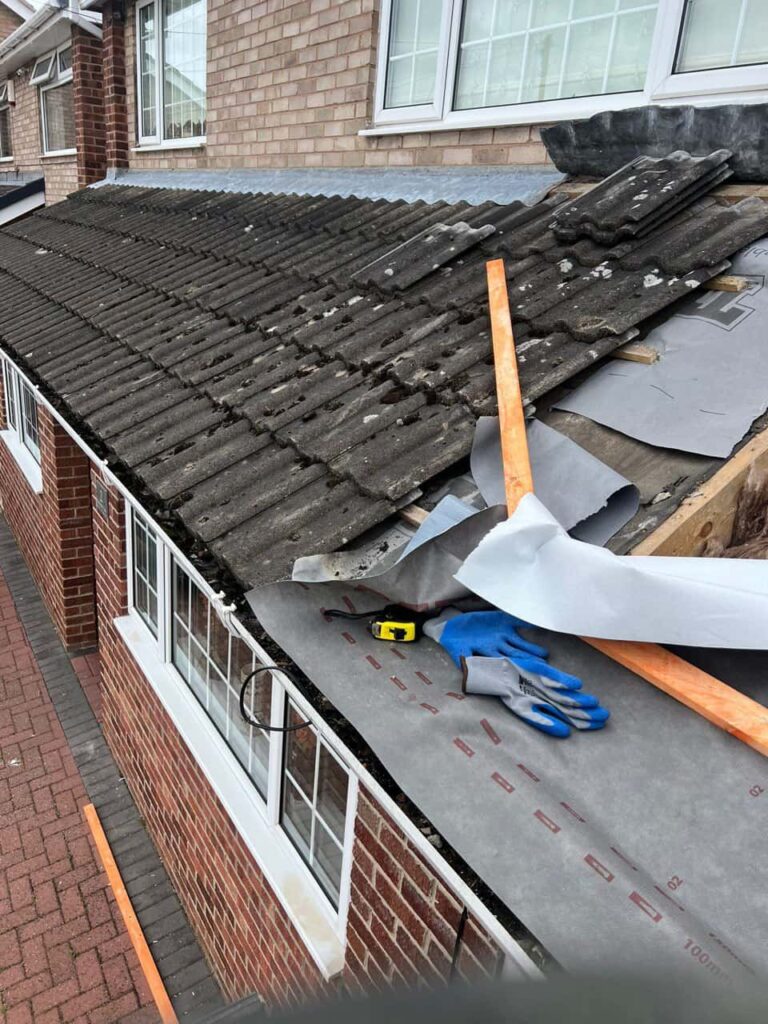
A slipped roof tile can appear to be a relatively minor defect, particularly when only one tile has moved and the remainder of the roof looks intact. However, tiled roofs rely on correctly positioned, overlapping units to form an effective external covering. Once a tile moves out of position, part of that carefully arranged system is no longer functioning exactly as intended.
Leaving the problem until after another period of wind and rain can allow the affected area to become more exposed. The tile itself may move further, neighbouring tiles may need checking, and rainfall can potentially reach parts of the roof that would normally remain covered.
For homeowners in Great Missenden, Buckinghamshire, dealing with slipped tiles while the problem remains localised can provide an opportunity to identify why the movement occurred and restore the affected section before further weather places additional demands on it. The important point is not simply to push the tile back into position, but to establish whether the tile, fixing or supporting components require attention.
Why Is It Important to Repair Slipped Roof Tiles Promptly?
A slipped tile changes the arrangement of the roof covering. The extent of the problem depends on how far the tile has moved, where it is located and what caused the movement.
Prompt assessment can help determine:
- Whether the tile can be securely repositioned
- Whether the tile itself is damaged
- Whether its fixing has deteriorated
- Whether the supporting batten remains sound
- Whether neighbouring tiles have also become loose
- Whether the intended overlap has been compromised
- Whether water has reached beneath the covering
- Whether previous repairs are contributing to the problem
- Whether the movement is isolated or part of a wider pattern
- Whether other nearby weaknesses could become apparent during bad weather
Understanding the cause allows the repair to address more than the visible symptom.
Slipped Tiles Interrupt the Intended Roof Covering
Roof tiles are installed in overlapping courses.
This arrangement allows rainfall to travel down the roof towards the lower edge while the supporting layers remain protected beneath the covering.
When one tile slips, the intended overlap changes.
Depending on the degree of movement, an area that would normally remain covered can become more exposed.
Restoring the tile correctly helps reinstate the intended arrangement before further rainfall reaches the roof.
A Small Gap Can Become More Significant During Heavy Rain
A slipped tile does not necessarily cause immediate water ingress.
The underlying roof construction may continue providing some protection, and the exact effect depends on the location and extent of displacement.
However, a gap in the outer covering creates an unnecessary vulnerability.
During sustained or wind-driven rain, water can reach areas that would normally receive much less direct exposure.
Repairing the tile removes this avoidable weakness.
Wind Can Move an Already-Loose Tile Further
A tile that has already slipped may no longer be secured as intended.
Further windy conditions can potentially increase the movement.
A tile that has only shifted slightly may become more substantially displaced if the original fixing problem remains unresolved.
This is one reason dealing with the defect before another period of bad weather can be sensible. The existing weakness can be investigated while the tile remains relatively close to its intended position.
Bad Weather Can Reveal Weaknesses in Nearby Tiles
One slipped tile does not automatically mean neighbouring tiles are loose.
However, if several tiles were installed using similar fixings and have experienced comparable ageing or deterioration, nearby units may deserve attention.
A professional slipped tile repair can include checking the immediate surrounding area.
If neighbouring tiles remain secure, the repair can stay focused. If additional movement is discovered, it can be addressed according to the actual condition of the roof.
The Tile May Have Slipped Because Its Fixing Has Failed
Tiles do not normally move without a reason.
A common explanation is that the component intended to hold the tile in its correct position is no longer performing effectively.
If this is the case, simply sliding the tile back upwards does not resolve the defect.
The fixing arrangement needs to be considered so that the tile can remain properly secured after the repair.
Repositioning Is Not Necessarily the Same as Repairing
From ground level, a successfully repositioned tile may appear completely repaired.
However, appearance alone does not confirm that the underlying problem has been resolved.
If the fixing remains ineffective, the tile may move again during subsequent windy conditions.
A proper repair aims to identify why movement occurred and restore the tile appropriately rather than focusing solely on its visible position.
The Tile Itself May Be Damaged
Sometimes the fixing remains less significant than damage to the tile.
Cracks, broken sections or deterioration around the fixing point can prevent a tile from remaining correctly secured.
Where the tile itself is unsuitable for continued use, replacement may be more appropriate than repositioning.
The replacement should integrate correctly with the surrounding roof covering and maintain the intended overlap.
Supporting Battens May Need Checking
Tiles are supported by battens beneath the visible covering.
If a local section of batten has deteriorated, one or more tiles may begin to move.
This becomes particularly relevant where several neighbouring tiles are slipping or where the same section has experienced repeated problems.
Repairing the supporting defect can be necessary before the tiles themselves can be secured reliably.
One Slipped Tile Can Be an Isolated Problem
It is important to keep the scale of the defect in perspective.
One slipped tile does not automatically indicate that the complete roof is deteriorating.
Where assessment confirms that the problem is confined to an individual tile or fixing and surrounding materials remain serviceable, a targeted repair may be entirely appropriate.
Prompt attention can help keep an isolated defect exactly that: a localised repair.
Several Slipped Tiles Deserve Broader Assessment
When multiple tiles are moving, the pattern becomes more informative.
Several displaced tiles within the same area may suggest a shared issue with fixings or supporting components.
Movement appearing across different sections can justify a broader assessment of the roof covering.
This does not automatically mean extensive work is necessary, but it does mean that repeatedly addressing one tile at a time may not identify the complete cause.
Repeated Slipping Is Useful Diagnostic Information
If the same tile has already been repositioned and then slips again, there is a clear reason to investigate further.
The tile may be damaged, the fixing may not be effective or the supporting area may require attention.
Repeated movement indicates that the visible position was corrected without fully resolving whatever allowed the tile to move.
A cause-led repair is therefore particularly important before further bad weather.
Wind-Driven Rain Can Behave Differently From Ordinary Rainfall
Rain does not always fall vertically onto a roof.
Wind can drive moisture towards gaps and junctions from different directions.
A roof covering with all tiles correctly positioned is designed to manage normal exposure through its overlapping arrangement.
A displaced tile changes that arrangement.
Restoring the covering before more challenging weather reduces the opportunity for wind-driven rainfall to reach the vulnerable area.
Water Entry May Not Appear Directly Beneath the Slipped Tile
Where moisture enters a roof, the point where it becomes visible internally may not correspond exactly with the external defect.
Water can travel along roofing components before becoming noticeable elsewhere.
This is why diagnosing roof leaks purely from an internal damp mark can be difficult.
Where a slipped tile is present, the surrounding external area should be assessed rather than assuming the visible internal location identifies the exact entry point.
A Slipped Tile Does Not Always Produce an Immediate Leak
The absence of visible water inside the property does not necessarily mean the displaced tile should be ignored.
The outer roof covering has already changed from its intended arrangement.
There may be no immediate moisture problem, particularly if conditions have remained relatively dry.
Repairing the defect before prolonged rainfall is preferable to waiting for internal signs to determine whether the roof covering needs attention.
Underlay Should Not Be Treated as the Primary Roof Covering
The layers beneath tiles contribute to the complete roofing system, but they should not be relied upon as a reason to leave a visible tile defect unresolved.
The tiles form the principal external covering.
When one moves substantially, restoring that covering remains important.
The condition of underlying materials can also vary, particularly on older roofs, so their presence should not be assumed to make a slipped tile unimportant.
Exposure Can Affect the Area Beneath the Tile
Once a tile moves, previously sheltered materials may receive more direct exposure.
The significance depends on the extent of displacement and how long the defect remains.
Prompt repair allows the area beneath and around the tile to be inspected before continued weathering complicates the situation.
Where everything remains serviceable, the repair can remain straightforward and proportionate.
Roof Location Influences How Significant the Movement Is
Not every tile occupies an identical position within a roof.
A slipped tile within the main roof slope can require a different repair approach from movement close to a valley, ridge, hip or other roof detail.
The surrounding construction matters.
This is another reason professional assessment is preferable to treating every displaced tile as an identical problem.
Slipped Tiles Near Valleys Need Careful Attention
Valleys manage water arriving from adjoining roof slopes.
The tiles surrounding them need to integrate correctly with the valley detail.
A displaced tile in this area can therefore deserve particularly careful assessment.
The tile should be considered alongside the surrounding construction so that the repair restores the complete local arrangement rather than focusing only on one visible unit.
Movement Around Ridges and Hips Can Require Different Repairs
Tiles and components around ridges and hips perform different roles from ordinary tiles within the main roof slope.
Visible movement in these areas should be assessed according to the specific roof detail.
The objective remains the same: identify why the component has moved and restore the affected area appropriately before additional weather places further demands on it.
Roof Edges Can Be More Exposed to Wind
Tiles positioned around certain roof edges may experience different exposure from those surrounded on all sides by other tiles.
Where movement occurs near an edge, the complete local detail should be considered.
If a fixing has deteriorated or another component has become unstable, addressing it before windy weather can help prevent the problem from progressing.
Previous Repairs Can Influence Future Movement
A roof may contain replacement tiles or repaired sections from earlier work.
A correctly completed repair can perform perfectly well alongside the original covering.
However, if a replacement tile was not properly secured or does not sit correctly with surrounding units, movement can recur.
Where slipping develops around a previous repair, the complete local arrangement should be checked.
Poorly Fitting Replacement Tiles Can Create Irregularities
A replacement tile needs to sit correctly within the existing roof covering.
If its profile or positioning does not integrate properly with neighbouring tiles, the overlap can become inconsistent.
This can affect both appearance and performance.
Professional repair therefore involves ensuring replacement materials work appropriately with the existing roof rather than simply filling an obvious gap.
Tile Alignment Can Reveal Developing Movement
A tile does not need to have completely slipped out of position before a problem becomes visible.
A unit sitting noticeably lower than neighbouring tiles may already have moved.
Likewise, an irregular course can indicate that more than one tile is beginning to shift.
Identifying these signs before substantial displacement occurs can allow the affected section to be assessed earlier.
A Tile That Moves Once May Not Move Again After Proper Repair
Where the cause is genuinely isolated and properly corrected, there is no reason to assume the tile will continue slipping indefinitely.
The tile or suitable replacement can be correctly positioned and secured.
This is why diagnosis matters.
The purpose of repair is not merely to improve the roof temporarily before the next weather event, but to address the local defect responsible for the movement.
Prompt Repair Can Prevent a Minor Defect Becoming More Complicated
Not every unattended slipped tile will necessarily lead to widespread roof damage.
However, leaving a known weakness exposed creates unnecessary uncertainty.
Further movement, prolonged rainfall or deterioration around the affected area can potentially make the eventual repair more involved.
Dealing with the problem while it remains limited provides the opportunity for a focused assessment and proportionate repair.
Early Attention Can Reduce Disturbance to Sound Roof Areas
When one tile has slipped and neighbouring materials remain serviceable, repair can often concentrate on a relatively small area.
This allows sound sections of the roof to remain undisturbed.
If deterioration is allowed to continue around the original defect, the area requiring attention can potentially become larger.
The principle is therefore to address genuine local problems without unnecessarily interfering with the rest of the covering.
Bad Weather Does Not Create Every Tile Problem
It is easy to describe strong wind as the cause whenever tiles move during poor weather.
However, weather often exposes a pre-existing weakness.
A secure tile may tolerate conditions that cause an already compromised unit to move.
The underlying fixing, tile condition and supporting components therefore need to be considered rather than attributing every instance of movement solely to the latest weather.
The Cause Matters More Than the Timing of the Slip
Homeowners may not know exactly when a tile moved.
It may only become noticeable after looking at the roof from a different position or after a period of windy weather.
The precise timing is usually less important than understanding the condition now.
Once a displaced tile has been identified, assessment can establish whether the problem remains localised and what needs to be done to restore the area.
Waiting for a Leak Is Not an Effective Maintenance Strategy
A roof defect does not need to produce an internal damp patch before it deserves attention.
A visibly slipped tile already provides evidence that part of the external covering is no longer in its intended position.
Investigating the defect at this stage can be considerably more informative than waiting to see whether water eventually becomes visible indoors.
Temporary Appearance Can Be Misleading
A slipped tile may sometimes move only slightly and still appear to cover most of the original area.
From ground level, the difference can seem insignificant.
However, the tile’s fixing and overlap may no longer be functioning as intended.
The amount of visible movement alone does not establish whether the repair is necessary.
Nearby Tiles Should Be Checked Without Assuming They Need Replacing
A sensible repair includes appropriate consideration of the surrounding area.
This does not mean replacing sound neighbouring tiles unnecessarily.
The purpose is to determine whether they remain secure and correctly positioned.
If they do, the repair can remain focused on the original defect. If similar weakness is identified nearby, the scope can be adjusted accordingly.
Roof Age Should Be Considered Alongside Condition
Older roofs can develop individual slipped tiles without requiring wholesale replacement.
Age alone does not determine the appropriate repair.
The condition of the tile, fixings, battens, underlay and surrounding covering provides more useful information.
A mature roof with a genuinely isolated defect may still be suitable for targeted repair.
Widespread Movement Can Change the Appropriate Approach
Where tiles repeatedly slip across several areas, repairing individual units one after another may become less effective.
A broader assessment can determine whether there is a shared underlying reason.
This helps distinguish between an isolated slipped tile repair and a wider roofing issue requiring a different approach.
The scope of work should follow the evidence rather than assumptions about the age or appearance of the roof.
Professional Assessment Helps Keep Repairs Proportionate
A visible slipped tile should neither be dismissed as insignificant nor automatically treated as evidence of major roof failure.
Professional assessment helps establish the appropriate middle ground.
If the defect is isolated, focused repair may be all that is needed.
If the movement reveals wider deterioration, that can be identified before repeated problems develop.
Repairing Before Bad Weather Provides Greater Certainty
No roofing repair can control future weather conditions.
What can be controlled is the known condition of the roof before those conditions arrive.
Correcting a visible slipped tile removes an identifiable weakness from the roof covering.
This provides greater confidence that the affected section is correctly arranged rather than knowingly leaving it exposed through another period of wind and rain.
Slipped Tile Repairs Should Address the Whole Local Area
A good repair is focused without being unnecessarily narrow.
The displaced tile is the obvious starting point, but the fixing, supporting batten, neighbouring units and immediate roof covering should also be considered where accessible and relevant.
This approach helps determine whether the visible tile is the complete problem or simply the first indication of a localised weakness.
Why Professional Slipped Tile Repairs Matter
Slipped tiles can look straightforward, but the reason behind the movement is not always visible from the ground. Correct repair requires understanding whether the tile itself, its fixing, supporting batten or surrounding roof section has contributed to the problem.
At LS Roofing Great Missenden, we assess the affected area before determining the appropriate repair. The aim is to restore the tile covering properly while identifying nearby issues where they genuinely require attention.
For homeowners in Great Missenden, Buckinghamshire, arranging slipped tile repairs before further poor weather can help address a known vulnerability while the problem remains as localised and manageable as possible.
Conclusion
Slipped roof tiles should ideally be repaired before the next period of bad weather because displacement compromises the intended arrangement of the roof covering. Further wind can potentially increase movement, while prolonged or wind-driven rain may reach areas that would normally remain protected by correctly overlapping tiles.
The most important part of the repair is identifying why the tile slipped. Failed fixings, damaged tiles, deteriorated battens or localised movement can all require different responses. Where the problem is isolated, a targeted repair may be entirely appropriate; where several tiles are moving, broader assessment can help identify a shared cause.
If you have noticed a slipped, loose or displaced roof tile at your property in Great Missenden, Buckinghamshire, contact LS Roofing Great Missenden. We can assess the affected section and recommend an appropriate repair before further weather places additional demands on the roof.
Call us on: 01494 302 894
Click here to find out more about LS Roofing Great Missenden
Click here to complete our contact form and see how we can help with your roofing needs.