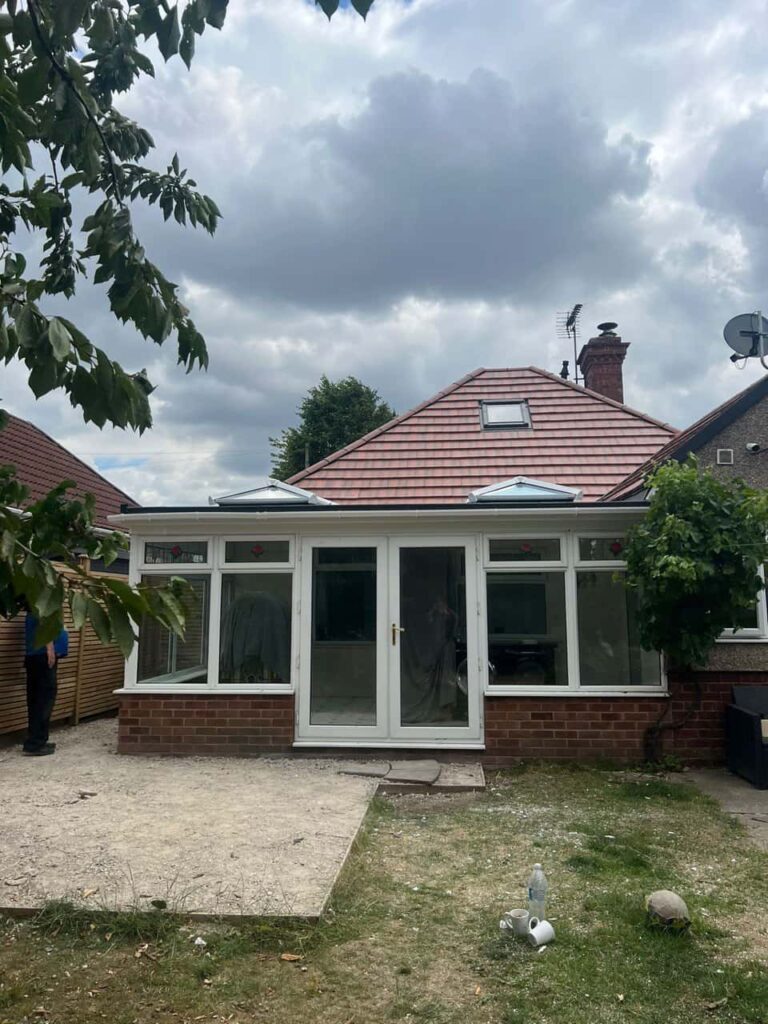
A slipped roof tile can appear to be a relatively minor problem. The tile may only have moved slightly, there may be no visible leak, and the rest of the roof can still look perfectly sound. However, roof tiles form part of an overlapping weather-resistant system, and when one moves out of position, the protection provided by that system can be compromised.
Leaving a slipped tile unattended can allow a straightforward localised defect to develop into water ingress, damage to surrounding roofing materials or further tile movement.
For homeowners in Great Missenden, Buckinghamshire, arranging an early professional assessment is a sensible way to establish why the tile has slipped and restore the affected area before deterioration spreads. At LS Roofing Great Missenden, we focus on identifying the underlying cause rather than simply treating what can be seen from ground level.
Why Do Roof Tiles Slip?
Roof tiles are installed in a carefully arranged pattern and secured using appropriate fixings and supporting battens. If part of this system deteriorates or becomes disturbed, an individual tile can move from its intended position.
Common Causes of Slipped Roof Tiles Include:
- Ageing or deteriorated fixings
- Damaged roof battens
- Strong winds and adverse weather
- Cracked or broken tiles
- Previous poor workmanship
- Natural deterioration of roofing components
- Movement within the surrounding roof covering
Understanding the cause matters because simply repositioning a tile may not provide a lasting repair if the fixing or support beneath it has failed.
What Happens When a Tile Moves Out of Position?
Roof tiles work by overlapping one another so that rainwater is directed down the roof towards the guttering.
When a tile slips, this carefully arranged coverage can be interrupted.
The Underlying Roof Becomes More Exposed
A displaced tile may reveal part of the underlay or surrounding roof construction.
Although underlay provides an additional level of protection, it is not intended to replace the primary roof covering indefinitely. Continued exposure can increase the likelihood of deterioration and water penetration.
1. Rainwater May Find a Route Beneath the Roof Covering
One of the main concerns with a slipped tile is water ingress.
Rain does not need a large opening to penetrate a vulnerable roofing area. Wind-driven rain can reach beneath surrounding tiles and enter areas that would normally remain protected.
Water Can Travel Before Becoming Visible
A common misconception is that a leak will appear directly beneath the slipped tile.
In reality, water can travel along:
- Underlay
- Battens
- Roof timbers
- Other internal surfaces
It may eventually become visible some distance away from the original entry point.
This means the absence of a damp patch directly below the damaged tile does not necessarily mean that no water is entering.
2. The Underlay Can Become Vulnerable
The underlay beneath tiles provides secondary protection against moisture, but prolonged exposure can affect its condition.
If an older roof already has ageing underlay, a slipped tile may expose an area that is less capable of dealing with repeated moisture.
Once the underlay becomes damaged, water can potentially reach battens, timbers and the internal roof space more easily.
3. Roof Battens Can Be Affected
Tiles are supported by battens running across the roof.
If water repeatedly reaches these components, their condition can gradually deteriorate. Problems with battens are particularly relevant because deterioration may also affect how securely surrounding tiles are supported.
A problem that initially involves one slipped tile can therefore become more complicated if the underlying components are left exposed.
4. Surrounding Tiles May Become Less Secure
A slipped tile does not always remain an isolated problem.
Depending on why it moved, neighbouring tiles may also have weakened fixings or deteriorated support.
Warning Signs of Wider Tile Movement Include:
- Several uneven tiles
- Gaps appearing between tiles
- Roofing debris around the property
- Tiles visibly sitting lower than surrounding sections
- Repeated tile movement following windy weather
A professional inspection can establish whether the problem concerns one tile or a wider section of the roof.
5. Internal Damp Can Develop Gradually
Water ingress is not always dramatic.
Instead of water visibly dripping through the ceiling, moisture can accumulate slowly within the roof space.
Over time, homeowners may begin noticing:
- Damp patches
- Ceiling staining
- Discolouration
- Moisture within the loft
- Musty odours
By the time these symptoms become obvious indoors, the original roofing defect may have existed for some time.
6. Roof Timbers May Eventually Be Exposed to Moisture
If water passes through the roof covering and secondary protective layers, it can reach structural timber.
Occasional contact does not necessarily mean immediate structural failure, but repeated or prolonged moisture exposure is something that should be avoided.
The longer a defect remains unresolved, the greater the opportunity for moisture to affect materials beyond the original slipped tile.
7. Wind Can Make the Problem Worse
A partially displaced tile may be more vulnerable during subsequent periods of strong wind.
Once a tile is no longer properly secured, wind can potentially move it further or dislodge it completely.
This can increase the size of the exposed area and may also affect neighbouring tiles.
A loose tile itself can also become a concern if it eventually falls from the roof.
Why Has the Tile Slipped in the First Place?
This is one of the most important questions during any roof repair.
If the tile is undamaged but has moved, something has allowed that movement to occur.
A Professional Roofer May Need to Check:
- The tile itself
- Its fixing
- The condition of the batten
- Surrounding tiles
- The underlay
- Previous repair work
- The general condition of that roof section
Finding the underlying cause reduces the likelihood of the same problem returning shortly afterwards.
Can You Simply Push a Slipped Tile Back Into Position?
A tile may sometimes appear as though it simply needs pushing upwards, but this does not address why it moved.
If a fixing has failed or a supporting batten has deteriorated, repositioning the tile without addressing the underlying defect may only provide a temporary result.
There is also the risk associated with attempting to access a roof without appropriate equipment or experience.
Professional repair allows both the visible tile and the supporting components to be checked.
Does One Slipped Tile Mean You Need a New Roof?
No. An individual slipped tile does not automatically indicate that the entire roof requires replacement.
If the surrounding roofing system remains in good condition and the cause is localised, a targeted repair may be entirely appropriate.
Local Repair May Be Suitable When:
- Only one or a small number of tiles are affected
- Surrounding tiles remain serviceable
- Battens are in suitable condition
- Underlay deterioration is limited
- There is no evidence of widespread roofing failure
The situation becomes different when tile movement is occurring repeatedly across several areas or when underlying materials have deteriorated extensively.
When Does a Slipped Tile Indicate a Wider Problem?
Sometimes the displaced tile is merely the most visible symptom of general roof deterioration.
Further investigation becomes particularly important when:
- Multiple tiles have moved
- Tiles repeatedly slip after repairs
- The roof covering is becoming brittle
- Leaks are occurring in several locations
- Large sections of underlay are deteriorated
- Battens show significant damage
- The roof has numerous existing defects
In these circumstances, treating one tile without considering the surrounding roof may fail to address the wider issue.
Why Early Roof Repairs Make Sense
The advantage of dealing with a slipped tile early is that the problem may still be confined to a relatively small area.
Once moisture begins affecting underlying components, the repair can become more involved.
Prompt attention helps:
- Restore the continuity of the roof covering
- Reduce exposure of the underlay
- Prevent further tile movement
- Identify damaged fixings or battens
- Limit opportunities for water ingress
- Maintain the overall condition of the roof
Roof maintenance is generally most effective when defects are addressed before secondary damage develops.
How Can You Spot a Slipped Tile From the Ground?
Some displaced tiles are obvious, while others can be difficult to identify.
Look for:
- A tile sitting lower than neighbouring tiles
- An unusual gap in the roof covering
- A section that appears uneven
- A visibly missing tile
- Roofing fragments on the ground
- Changes noticed after strong winds
Internal signs such as new damp patches or staining can also indicate that the roof requires inspection.
Avoid climbing onto the roof to investigate. A professional roofer can assess the area using appropriate access methods.
Professional Slipped Tile Repairs in Great Missenden
A slipped tile may be a small defect, but the quality of the repair matters.
At LS Roofing Great Missenden, we assess the affected area to establish both what has moved and why. This allows the repair to address relevant supporting components rather than simply repositioning the visible tile.
For properties in Great Missenden, Buckinghamshire, this approach can help preserve otherwise serviceable roofing materials and reduce the likelihood of a minor defect progressing into a more substantial problem.
Conclusion
Leaving a slipped roof tile in place can expose vulnerable parts of the roofing system to rain and weather. Over time, this may contribute to damaged underlay, deteriorating battens, internal damp, further tile movement and moisture reaching deeper into the roof structure.
Importantly, one slipped tile does not necessarily mean that your roof is failing. When the problem is localised and surrounding materials remain sound, professional repair may be relatively straightforward.
The key is not to leave the defect until secondary damage develops. If you have noticed a slipped or uneven roof tile at your property in Great Missenden, Buckinghamshire, LS Roofing Great Missenden can assess the affected area, identify why the tile has moved and carry out the appropriate repair to restore reliable protection.
Call us on: 01494 302 894
Click here to find out more about LS Roofing Great Missenden
Click here to complete our contact form and see how we can help with your roofing needs.